
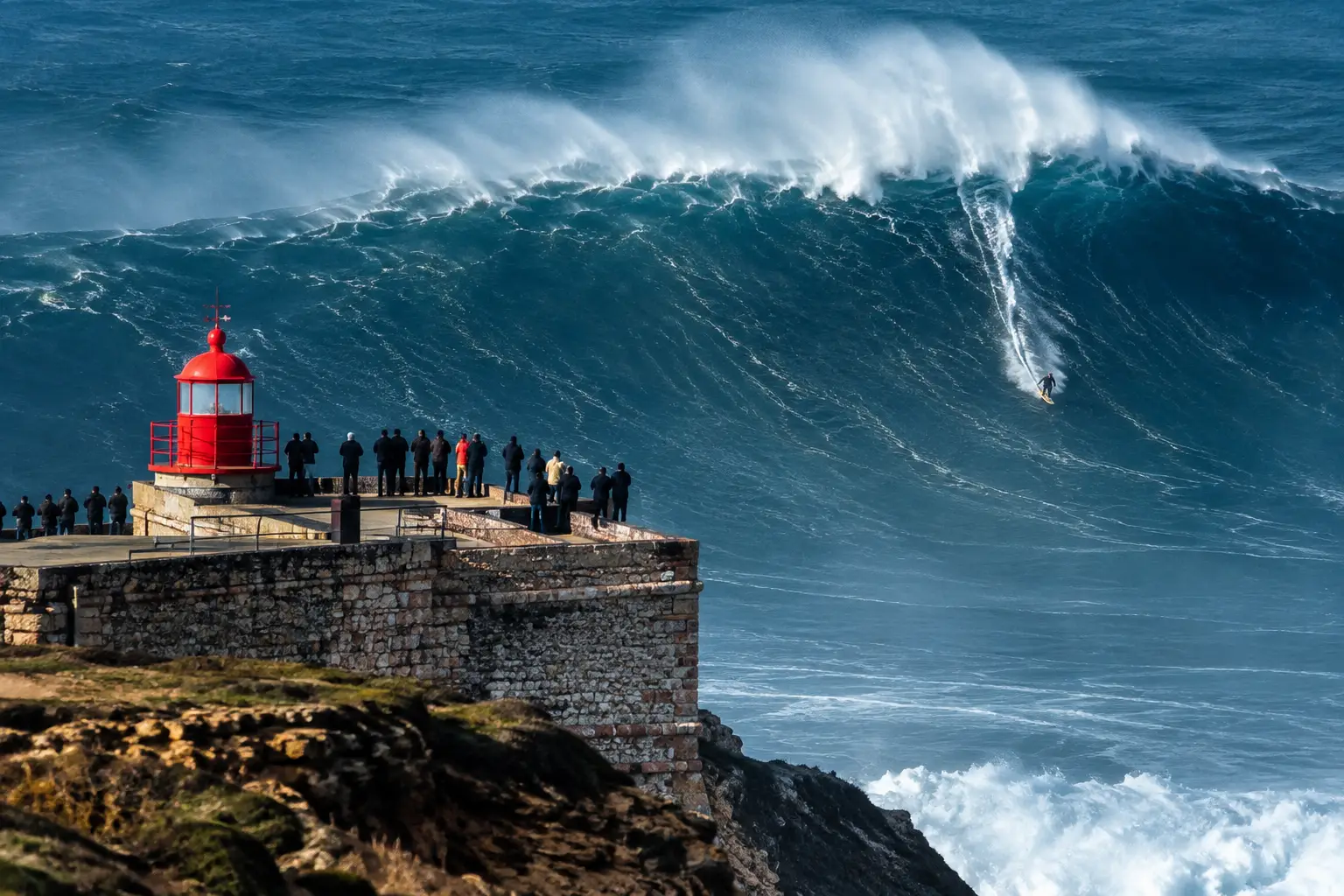
The question of when to see Nazaré waves has no fixed-date answer - and that is precisely what makes a visit so exciting. At Praia do Norte, on Portugal’s Atlantic coast, the sea can look almost calm one week and deliver powerful, towering waves the next. For travellers hoping to witness this remarkable spectacle, timing, weather and a flexible itinerary matter far more than simply choosing a month.
Nazaré is a rewarding stop at any time of year, with its fishing traditions, clifftop views and relaxed seaside atmosphere. But if giant waves are the priority, planning around the Atlantic swell season gives you a much better chance of seeing the beach at its most dramatic.
When to see Nazaré waves: the best season
The most reliable period for large waves in Nazaré runs from October to March, when North Atlantic storms send stronger swells towards the Portuguese coast. November, December, January and February are generally the months with the greatest potential for the impressive conditions seen in surf photographs and international competitions.
This is not a guarantee of giant waves every day. Nazaré’s famous surf depends on a combination of offshore storms, swell direction, wave period, wind and local tides. A bright winter morning may bring a sea that feels relatively quiet, while a powerful swell can arrive with little warning a few days later.
For travellers with flexible dates, late autumn and winter are the best choices. For those visiting Portugal in spring or summer, Nazaré remains well worth including in a private itinerary, but it is wiser to expect coastal scenery and village life rather than enormous surf.
Why winter produces the famous waves
Beneath Praia do Norte lies the Nazaré Canyon, an underwater trench that channels and concentrates incoming Atlantic energy. As the swell approaches the coast, this underwater geography can amplify the waves and create the exceptional conditions for which Nazaré is known.
The canyon is always there, but the energy required to make it truly dramatic comes most often with winter storms in the North Atlantic. This is why the town has become a global reference point for big-wave surfing, rather than simply another beach destination.
Check the forecast, not just the calendar
If seeing big waves is central to your trip, allow at least two or three days of flexibility around Nazaré. Forecasts usually begin to show a promising swell several days in advance, although conditions can still change as the date approaches.
A good day for giant waves often includes a strong, long-period Atlantic swell and winds that do not spoil the surface of the sea. Conditions that are ideal for experienced surfers are not always the most comfortable for sightseeing: rain, strong gusts and cold temperatures are common during the most dramatic winter swells.
That trade-off is worth considering when building your Portugal itinerary. A winter visit may offer the raw spectacle of Praia do Norte, but it may also require warmer clothing, a change of plans or a slower travel day. A private tour is particularly helpful here, as the route can be adjusted according to the forecast, road conditions and the time you would like to spend by the coast.
Where to watch the waves safely
The classic viewpoint is the Forte de São Miguel Arcanjo, located on the headland above Praia do Norte. From here, visitors can look across the beach and observe the scale of the swell from a safe elevated position. The fort is also closely linked to Nazaré’s surfing story and is one of the most popular places to watch athletes prepare for challenging conditions.
The nearby clifftop area of Sítio offers broad coastal views and a different perspective over Nazaré’s lower town and main beach. On days with a heavy swell, the contrast between the sheltered bay and the wild Praia do Norte can be striking.
Safety should always come before the photograph. Do not walk onto restricted areas, climb rocks near the sea or approach the shoreline to feel closer to the action. Large waves can arrive in sets, and the force of the water is far greater than it appears from a distance. Follow local instructions, respect barriers and choose a viewpoint well away from the edge.
Can you see surfers in Nazaré?
Possibly, but never assume they will be there. Professional big-wave surfers follow forecasts and may travel to Nazaré when conditions are suitable. On major swell days, the beach and viewpoints can become busy with spectators, photographers and media.
Surfing activity also depends on safety assessments, support teams and the individual decisions of the athletes. A huge swell does not automatically mean that surfers will enter the water. Sometimes the sea is simply too dangerous or conditions are too disorganised for a session.
If watching surfers is especially important, it is best to keep expectations open. The waves themselves are the main event, and even without surfers, a powerful day at Praia do Norte is unforgettable.
How to fit Nazaré into a Portugal holiday
Nazaré is often visited from Lisbon as part of a day that can also include Óbidos, Fátima or other destinations in central Portugal. However, travellers seeking the biggest waves should avoid overfilling the schedule. Weather windows do not work to a strict timetable, and rushing through the coast can mean missing the best viewing conditions.
An overnight stay is often the most comfortable option during winter. It gives you time to check conditions in the morning and afternoon, enjoy the town without pressure and avoid a long return journey after a day of wind and rain. Couples may prefer a slower coastal break, while families and small groups may value having transport arranged rather than navigating unfamiliar roads in unsettled weather.
For a day visit, an early departure from Lisbon makes the experience more relaxed. Nazaré has two distinct areas: the lower town by the beach and Sítio above the cliffs. The funicular between them is part of the local character, though weather and operating conditions can affect plans. Having a driver-guide or private transfer means the day can remain comfortable even if the weather changes.
What to wear for a winter wave day
Nazaré can feel considerably colder and windier than Lisbon, especially on the exposed headland. A waterproof outer layer, warm jumper, comfortable closed shoes and something to protect your ears from the wind will make the visit much more enjoyable. Sunglasses are useful too, even in winter, as low sun and sea spray can be intense.
Bring patience as well. The biggest-wave days are not beach days in the usual sense. You may spend time watching changing skies, listening to the ocean and waiting for a larger set to roll through. For many visitors, that anticipation becomes part of the experience.
Is summer a bad time to visit Nazaré?
Not at all. Summer offers warmer weather, a livelier seaside atmosphere and gentler conditions for enjoying the town, its promenade and local restaurants. It is a strong choice for travellers who want Nazaré as part of a cultural and coastal itinerary rather than a big-wave mission.
The key is to match the visit to your expectations. Visit between October and March for the best chance of powerful surf, ideally with flexibility around the forecast. Visit from late spring to early autumn for sunnier coastal scenery and an easier-paced stop. Both experiences are authentic, just very different.
At PortuCaleTravel, we believe Nazaré is best enjoyed with room to respond to the day itself. When the Atlantic is at full strength, give it the time, distance and respect it deserves - and let a well-planned route take care of the rest.