
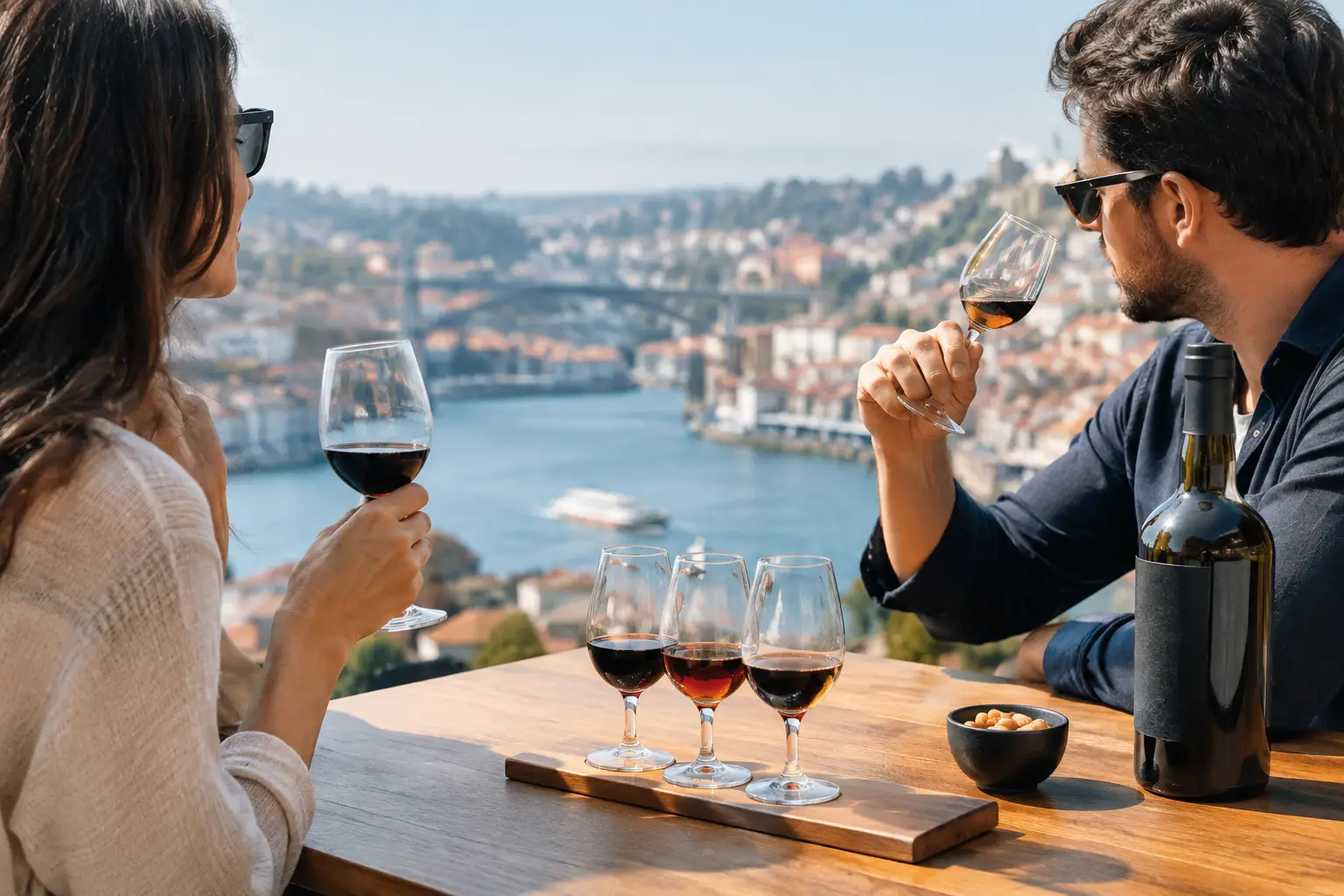
The first sip of Port tastes very different when you understand where it has travelled from. On a private Porto wine tasting tour, you are not simply moving between tasting rooms: you have time to see the river, hear why the cellars are in Vila Nova de Gaia and choose the styles that genuinely suit your palate. For couples, families and small groups, that breathing room can turn a pleasant afternoon into one of the most memorable parts of a holiday in northern Portugal.
Porto is compact on a map, but its steep streets, busy riverfront and many cellar options can make planning more complicated than expected. A private experience removes the pressure of fitting reservations, transport and tastings into a rigid group timetable. It gives you a local point of contact, a comfortable way to travel and a route shaped around what you want from the day.
What makes a private Porto wine tasting tour different?
The main difference is not only having a vehicle or a guide to yourselves. It is the freedom to set a sensible pace. A shared excursion usually follows fixed departure times, a standard itinerary and the same tasting for every guest. That format can work well for travellers who want a straightforward introduction, but it is less suitable when your group has particular interests, mobility needs or a limited amount of time in Porto.
With a private tour, the day can be designed around your priorities. Perhaps you would like to begin with panoramic views from Porto before crossing the Dom Luís I Bridge to Gaia. Perhaps you would prefer a relaxed lunch between cellar visits, extra time by the Douro or a later start after arriving in the city the previous evening. These details matter, especially on a short break when every hour counts.
Privacy is also valuable for the conversation itself. You can ask questions without competing with a large group, whether you are curious about ageing in oak, the difference between a tawny and a ruby, or how to select a bottle to take home. A well-curated tour should feel informative without becoming a lecture.
Understanding Port before you choose your tastings
Port is a fortified wine produced in the Douro Valley, then traditionally aged and stored by producers in the cellars of Vila Nova de Gaia. During production, grape spirit is added to halt fermentation, preserving natural sweetness and increasing the alcohol level. The result is richer and more varied than many first-time visitors expect.
A good tasting often introduces more than one style. Ruby Port is generally youthful, fruit-led and vibrant. Tawny Port spends longer ageing in wood, developing nuttier, dried-fruit and caramel notes. Late Bottled Vintage, commonly called LBV, offers depth and structure with a more accessible drinking window than many Vintage Ports. White Port can be fresh and aromatic, and is often enjoyed chilled or in a long drink.
You do not need prior wine knowledge to enjoy any of this. In fact, a private setting is ideal if you are new to Port, because the host can adapt the explanation to your level of interest. More experienced wine lovers may wish to focus on aged tawnies, single-harvest colheitas or a comparative Vintage Port tasting. The right choice depends on your taste, budget and how much you would like to drink during the day.
Plan the pace, not just the stops
It is tempting to book as many cellars as possible. In practice, two well-chosen tastings are usually more enjoyable than three rushed ones, particularly if each includes a guided visit. Port is stronger than table wine, and the walk between the historic centre of Porto and Gaia involves hills, steps and busy streets.
For many travellers, a balanced itinerary starts in Porto with a short orientation to the city and river, followed by a crossing to Gaia for the first cellar visit. Lunch can then be arranged nearby or in the city, depending on the route. A second tasting later in the afternoon creates a useful comparison between producers or styles, while leaving time to admire the view across the Ribeira before returning to your accommodation.
This is where private transport makes a practical difference. It is not about avoiding every walk - Porto is best appreciated on foot in places - but about avoiding unnecessary climbs, finding parking or driving after tastings. It can be particularly helpful for families travelling with older relatives, friends staying outside the centre or visitors arriving by cruise or train.
Timing matters more than most visitors expect
Cellar schedules, lunch hours and seasonal demand influence the best route. Late morning or early afternoon generally offers a comfortable rhythm, but the ideal time depends on your hotel location, preferred meal time and the experiences you wish to include. Some visitors like to begin early and keep the afternoon free; others prefer a slower day that finishes around sunset.
Advance booking is wise for private groups and for more specialised tastings. Popular cellars can have limited availability, especially during spring, summer and weekends. Reserving in advance also allows time to confirm languages, accessibility requirements and whether children or non-drinkers will be joining the group.
How to choose the right cellar experience
Not every cellar visit has the same character. Some focus on the history of a long-established house and its ageing lodges. Others feel more contemporary, with a strong emphasis on food pairings, architecture or premium tastings. Neither approach is automatically better. The best experience is the one that fits your group.
If it is your first visit to Porto, a classic guided cellar tour followed by a tasting of several Port styles is often the most useful starting point. It gives context to the labels you will see in restaurants and shops throughout your trip. If you already enjoy fortified wines, you may prefer a seated premium tasting with older expressions and more time for discussion.
Food pairings deserve consideration too. Chocolate, cheese and nuts can bring out different qualities in Port, but they also make the tasting more filling. If you have a restaurant reservation afterwards, a lighter tasting may be the better choice. Share dietary requirements in advance rather than hoping they can be accommodated on arrival.
Questions worth asking before you book
A personalised service should make the practical details clear before the day begins. Ask what is included in the quoted experience: private transport, guide or driver-guide, cellar admissions, tastings, lunch and hotel collection may be handled differently depending on the itinerary.
It is also sensible to ask how much walking is expected, whether the route can be adjusted for reduced mobility and what happens if a preferred cellar is unavailable. Transparent planning protects the day from last-minute surprises. For travellers who appreciate support in Portuguese from reservation through to the end of the service, this preparation can make a significant difference.
At PortuCaleTravel, private tours are planned around the group rather than around a coach schedule. That means the route can be shaped to suit your collection point, interests and available time, with local support helping the logistics run smoothly.
Make room for Porto beyond the glass
A wine-focused day does not need to stay inside cellars. Porto’s appeal lies in the setting as much as in the tasting: tiled façades, the movement of the Douro, the old boats below Gaia and the changing skyline from one side of the river to the other. Allowing time between appointments makes these moments part of the experience instead of scenery viewed through a car window.
If you plan to buy bottles, consider luggage limits and how you will carry them for the rest of your holiday. Your host can advise on practical collection arrangements, but it is worth choosing bottles you are genuinely excited to open rather than buying only for the label. And if you do not drink alcohol, you can still enjoy the city, the viewpoints, a meal and the stories behind the trade while the rest of your group tastes.
A carefully paced private Porto wine tasting tour leaves space for your own preferences, whether that means a serious exploration of aged Ports or simply a beautiful afternoon with people you enjoy. Tell your local host what would make the day feel right for your group, and let the route be built around that.