
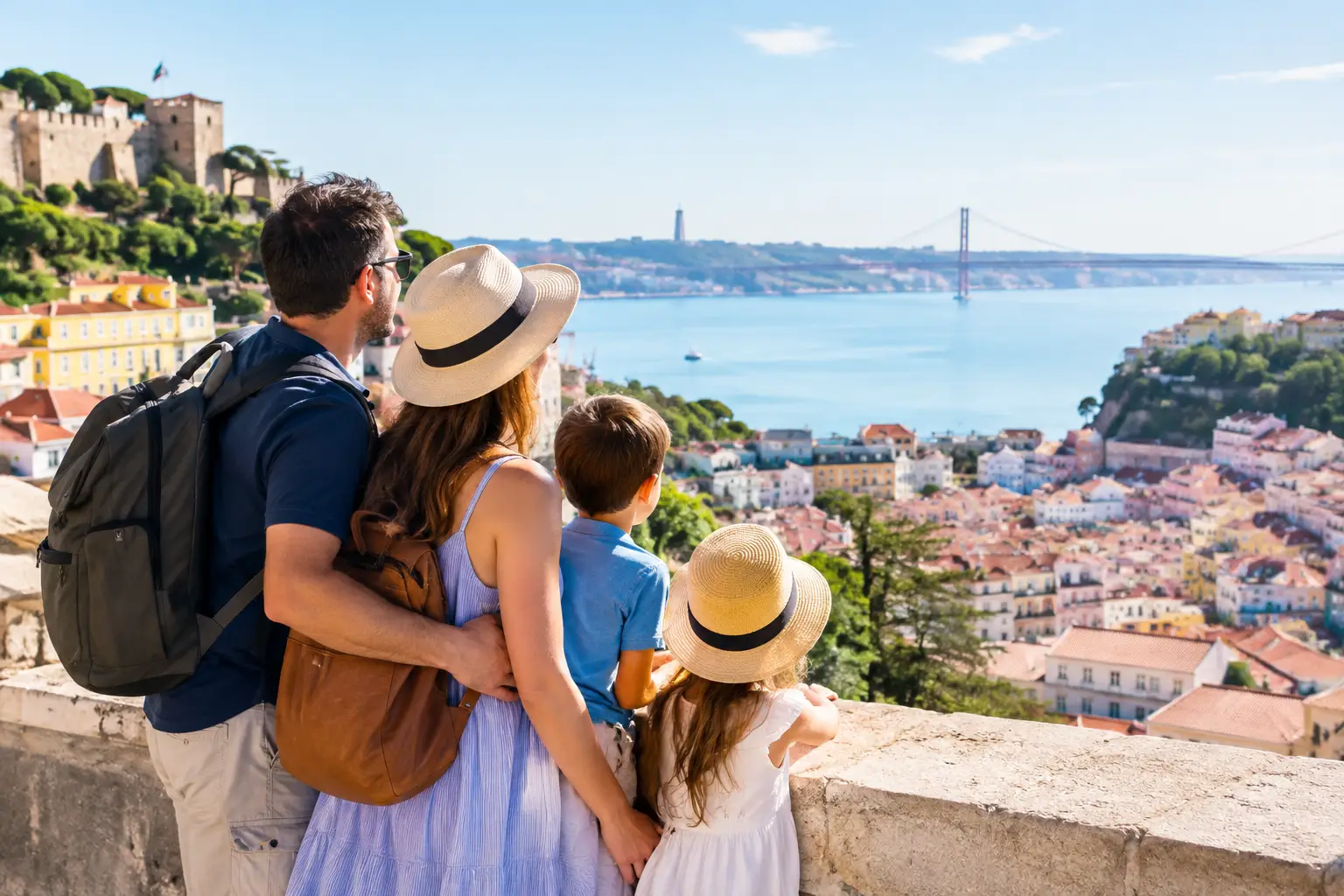
Landing in Lisbon with children, grandparents or a mixed-age group changes the pace of a holiday straight away. The best Portugal family holiday itinerary ideas are not about fitting every landmark into a week. They are about choosing a comfortable rhythm, keeping hotel changes to a minimum and leaving room for the moments children often remember most: a tram ride, a custard tart, an Atlantic beach and a castle with real ramparts.
For many families, seven days offers enough time to experience Portugal’s classic highlights without treating the country as a checklist. A well-planned private route can combine Lisbon, Sintra, Cascais, Fátima, Nazaré, Óbidos and Porto while removing the pressure of driving unfamiliar roads, finding parking or managing luggage between connections.
Portugal family holiday itinerary ideas: a relaxed 7-day route
This itinerary is designed for a first family holiday in Portugal, particularly for travellers who want culture, scenery and easy logistics in the same trip. It works well for school-age children, teenagers and adults travelling together. With toddlers, it is worth shortening the longer touring days and allowing more time in Lisbon or Porto.
Day 1: Arrive in Lisbon and settle in
Keep arrival day deliberately light. After an airport transfer and hotel check-in, stay close to your base rather than trying to cross the city. The riverside area around Praça do Comércio and Belém is easier for a gentle first walk than Lisbon’s steep historic lanes, especially when there is a pushchair or tired children involved.
A relaxed meal, an early night and a clear plan for the following morning set a better tone than trying to visit a museum after a long flight. If energy allows, choose a viewpoint near your hotel for a first look across Lisbon’s red rooftops.
Day 2: Lisbon at a family-friendly pace
Lisbon rewards families who choose a few experiences well. Begin with the historic centre, where the old streets, yellow trams and wide river views bring the city to life without needing a packed programme. A private guide or driver can adapt the order of visits around the weather, opening hours and the group’s energy.
Belém is particularly suitable for a family afternoon. Its open riverside setting gives children more space than the narrow lanes of Alfama, while adults can appreciate the monuments and stories connected to Portugal’s maritime past. Allow time for a proper stop rather than treating the famous pastries as something to eat while walking.
The trade-off is simple: Lisbon has far more than one day can hold. Families who love museums, food and city life may prefer an extra Lisbon night and skip one stop elsewhere. Those keen to see several destinations should accept that the city visit will be an introduction, not an exhaustive tour.
Day 3: Sintra and Cascais
Sintra is magical, but it can also be busy, hilly and slower to navigate than many visitors expect. For a family day, choose one main palace or estate rather than attempting several. This makes the day more enjoyable for children and gives adults time to appreciate the landscape instead of watching the clock.
After Sintra’s hills, continue towards Cascais for a change of scene. The coastal air, marina and beachside promenade offer a welcome contrast to the palace interiors. On warmer days, a pause by the sea can be the highlight for younger travellers; in cooler months, the dramatic Atlantic coastline still makes the journey worthwhile.
A private tour is particularly helpful on this route because it avoids the need to coordinate trains, local buses and timed entry while managing a family. It also allows small but valuable adjustments, such as a later start, a longer lunch or an earlier return to Lisbon.
Day 4: Lisbon to Porto via Fátima, Nazaré and Óbidos
This is the itinerary’s fullest day, and it is best approached as a private transfer with memorable stops rather than a conventional sightseeing day. Leaving Lisbon, Fátima provides a quieter, reflective contrast to the capital. Families with a religious connection may wish to spend longer here, while others may prefer a shorter visit focused on the sanctuary and its significance.
Nazaré brings a completely different atmosphere. Its wide beach and fishing traditions are enjoyable in any season, while the clifftop views are especially striking. In winter, the town is known for its enormous waves, but sea conditions should always be viewed from safe, designated areas.
Finish the journey south of Porto with a stop in Óbidos. Its whitewashed houses, medieval walls and small independent shops feel made for family imagination. The cobbled streets can be uneven, so comfortable footwear matters, and those travelling with a buggy may find a carrier more practical.
This route makes for a long day, particularly with young children. The advantage is that it turns a transfer day into part of the holiday and avoids another hotel night. Families who prefer shorter journeys can stay overnight in the Óbidos or Nazaré area and reach Porto the following day.
Day 5: Porto’s historic character
Porto feels more compact than Lisbon, but its hills are just as real. Plan the day around a manageable area, perhaps beginning by the Ribeira district and Douro riverfront before moving to viewpoints and central streets. Children often enjoy watching the boats on the river and crossing the Dom Luís I Bridge, while older family members may appreciate the city’s architecture and slower, more intimate atmosphere.
Do not overfill the afternoon. Porto is a city for lingering over lunch, stopping for a sweet treat and taking photographs from the viewpoints. A flexible vehicle service is useful when mobility is a concern, as it can reduce steep walks without separating the group.
Day 6: Porto with space for your family’s interests
Use this day to shape the holiday around the people travelling with you. Families with teenagers may enjoy exploring creative neighbourhoods, markets and contemporary cultural spaces. Those travelling with grandparents might prefer a gentler panoramic tour, a river cruise or a long lunch overlooking the Douro.
This is also a good place to build in unplanned time. A family holiday does not need an attraction booked for every hour. A free afternoon lets children rest, parents browse shops without rushing and everyone enjoy the city in their own way.
Day 7: Departure or a calm final morning
Schedule the final hours according to your flight rather than squeezing in one last major sight. A pre-arranged transfer offers reassurance when the group has luggage, children and a departure time to meet. If your flight leaves later in the day, choose a final riverside walk or a relaxed breakfast near your hotel.
How to make a Portugal family route work better
The biggest planning decision is not which palace or viewpoint to visit. It is how much moving around your family can comfortably handle. Two hotel bases, Lisbon and Porto, are usually far easier than changing accommodation every night. They also make it simpler to return for rests, collect forgotten items or adjust plans when the weather changes.
Private transport becomes especially valuable on a multi-generational trip. It keeps the group together, provides room for luggage and gives you control over stops and timing. For travellers arriving from Brazil, support in Portuguese can also make practical details clearer from the moment of booking through to the final transfer.
When building experiences personalised to your family, share the ages of children, mobility needs, food preferences and whether anyone has strong interests such as history, faith, beaches or photography. This information changes the right route. A couple travelling with independent teenagers will enjoy a different day in Sintra from grandparents travelling with a six-year-old.
PortuCaleTravel can organise private tours and transfers around these decisions, so the itinerary reflects your family rather than a fixed coach schedule. The aim is not to remove spontaneity, but to make spontaneity possible without the usual logistical stress.
A good family holiday in Portugal leaves room for the unexpected: a viewpoint worth another ten minutes, a beach stop that becomes an afternoon, or a child who decides the simplest pastry shop was the best part of the day. Plan the structure carefully, then give your family permission to enjoy Portugal at its own pace.