
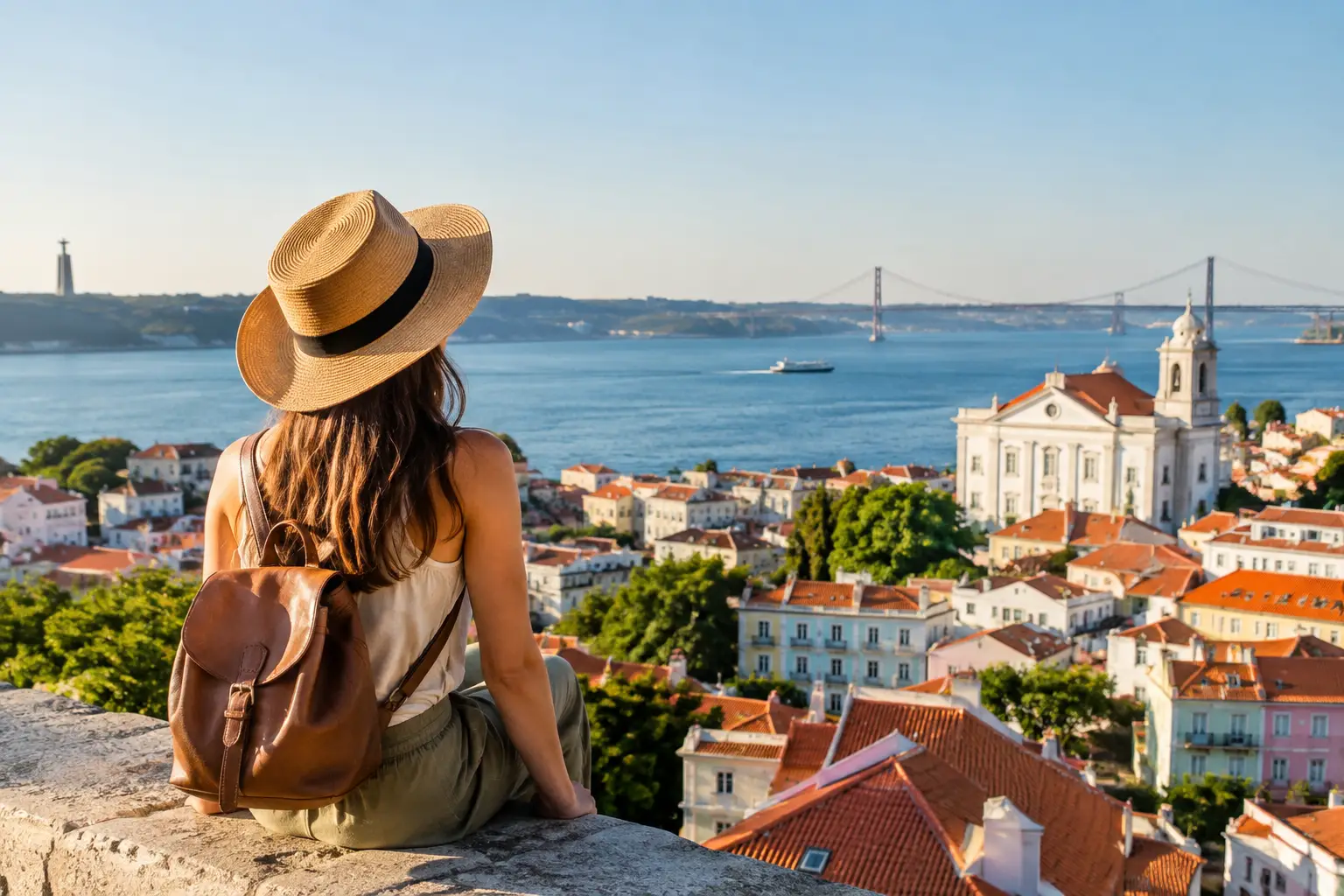
Portugal looks compact on a map, but a rewarding holiday is not simply a matter of joining Lisbon, Porto and the Algarve with a few straight lines. Mountain roads, historic centres with restricted access, popular attraction times and luggage changes can quickly shape the day. Knowing how to tour Portugal means choosing a route that leaves room to enjoy the country, rather than spending each morning working out the next connection.
For couples, families and private groups, the most comfortable approach is usually to combine a well-chosen base with day tours, then move north or south only when it genuinely improves the experience. Portugal rewards an unhurried rhythm: a long lunch in a small town, a viewpoint reached before the crowds, or time to walk through a historic centre without watching the clock.
How to tour Portugal around the right regions
A first holiday of seven to ten days works particularly well with two bases: Lisbon and Porto. Lisbon gives you easy access to Sintra, Cascais, Fátima, Nazaré and Óbidos, while Porto opens the door to the city’s riverside character, wine country and northern landscapes. Trying to sleep in a new place every night may look efficient on a spreadsheet, but it often creates unnecessary packing, check-in delays and tiredness.
If you have only four or five days, concentrate on Lisbon and its surroundings. The city itself deserves time, but the nearby destinations offer very different sides of Portugal. Sintra brings palaces, gardens and cooler hill air; Cascais adds the Atlantic coast; Fátima offers a meaningful spiritual stop; and Óbidos pairs easily with Nazaré for a day that moves from medieval streets to dramatic ocean views.
With ten to fourteen days, add Porto after Lisbon. Travel between the two cities can be done by train, but a private transfer with planned stops can turn a travel day into part of the holiday. The route can be adapted around what interests you most, whether that is the sanctuary at Fátima, the walled village of Óbidos or the coastline near Nazaré. This is especially helpful when travelling with children, older relatives or several pieces of luggage.
Start with the pace, not a list of attractions
The best itinerary depends less on how many places you can name and more on how you like to travel. Some visitors want early starts and full days; others prefer a relaxed breakfast, a scenic drive and one main visit. Neither style is wrong, but mixing both without planning can make a private trip feel rushed.
Allow a full day for Sintra if it is high on your list. Its palaces are spread across hilly terrain, parking can be limited and each site has its own character. Choosing two places to visit well is usually better than trying to fit in every palace before heading to Cascais at the end of the afternoon.
Likewise, Fátima, Nazaré and Óbidos can form a memorable day, but it needs sensible sequencing. Fátima is often best earlier in the day, while Nazaré’s cliffs and seafront are particularly enjoyable when there is time to pause for lunch or watch the Atlantic. Óbidos works beautifully later on, when the lanes become quieter, but it may not suit guests who find cobbled inclines difficult. A personalised route allows these practical details to guide the day.
Give Lisbon and Porto time of their own
Day trips should not replace the cities themselves. In Lisbon, set aside time for the older neighbourhoods, Belém and the viewpoints that make the city’s hills worthwhile. In Porto, the historic centre, riverfront and cellar district deserve more than a quick afternoon between train arrivals and dinner reservations.
A useful rule is to keep at least two unhurried days in Lisbon and two in Porto. If your holiday is shorter, choose one city as the base rather than attempting both. Portugal will still be there for the next visit, and a focused itinerary is often more memorable than an ambitious one.
Choose transport that suits your group
Hiring a car offers independence, particularly if you plan to stay in rural areas. It also comes with trade-offs: navigating unfamiliar roads, toll systems, parking restrictions and steep historic streets can take attention away from the holiday. In Lisbon, Sintra and Porto, driving is rarely the easiest part of the day.
Public transport is a good option for straightforward city-to-city journeys and independent travellers who enjoy planning. However, it becomes less convenient when you are travelling as a family, carrying luggage, working around limited mobility or hoping to visit several destinations in one day. Connections may be frequent, yet they do not always line up with the places you most want to see.
Private tours and transfers sit between those choices. You retain privacy and flexibility while a local professional handles the route, vehicle and timing. You can adjust a stop when a viewpoint deserves longer, arrange a comfortable pick-up from your accommodation and travel together rather than splitting between cars or navigating platforms. For many visitors, that support is most valuable on arrival day, departure day and multi-stop excursions.
At PortuCaleTravel, private experiences are designed around those realities, with transport, route planning and local support coordinated from booking through to the end of the service. The goal is not to fill every minute, but to make each day feel easy to enjoy.
Book the key moments before you arrive
Portugal is welcoming throughout the year, but popular places do not feel the same in every season. Summer brings long days and lively coastal towns, alongside higher temperatures and more visitors. Spring and autumn often offer a gentler balance for sightseeing, while winter can be excellent for city breaks, food and cultural visits, though daylight is shorter and Atlantic weather can change quickly.
Reserve accommodation in locations that reduce unnecessary travel. In Lisbon, a central hotel makes evening walks and restaurant plans simpler. In Porto, staying near the historic centre or riverfront creates the same advantage. For a beach-focused holiday, consider whether you want to be close to a resort town or use the coast as a relaxing addition to city touring.
Pre-book the experiences where timing matters most, particularly palace entries in Sintra, sought-after restaurants and any guided visit with limited capacity. Yet avoid scheduling every meal and hour. Portugal’s pleasures often appear between bookings: a quiet square, a small pastelaria, a ceramic shop or an unexpected viewpoint above the river.
Build in practical breathing room
International flights, jet lag and luggage can affect the first day more than travellers expect. Rather than arranging a demanding tour immediately after landing, consider an airport transfer, a comfortable check-in and an easy first evening nearby. The same applies to the final day: leave enough time for the airport and avoid relying on a tight connection from another city.
When travelling with family or friends, agree on the essentials before the itinerary is confirmed. One person may care most about historic sites, another about food and wine, and another about avoiding long walks. A private itinerary can accommodate different priorities, but it works best when the group identifies its non-negotiables early.
Let local knowledge shape the details
Portugal is a country of small differences that matter. A road that looks quick online may be slow through a village. A restaurant with a view may need an earlier booking. A palace visit may be far more enjoyable at a particular time of day. These are the details that turn a route from possible into comfortable.
This does not mean giving up independence. It means using support where it protects your time and confidence, while keeping space for your own discoveries. Ask for realistic driving times, advice on walking conditions, suitable lunch stops and a route that reflects your interests rather than a standard coach itinerary.
The most satisfying way to tour Portugal is to treat the journey as part of the experience. Leave space for the road between Lisbon and Porto, for the Atlantic wind in Nazaré, for a slower afternoon in Sintra and for the conversations that happen when nobody is worried about the next turn.