
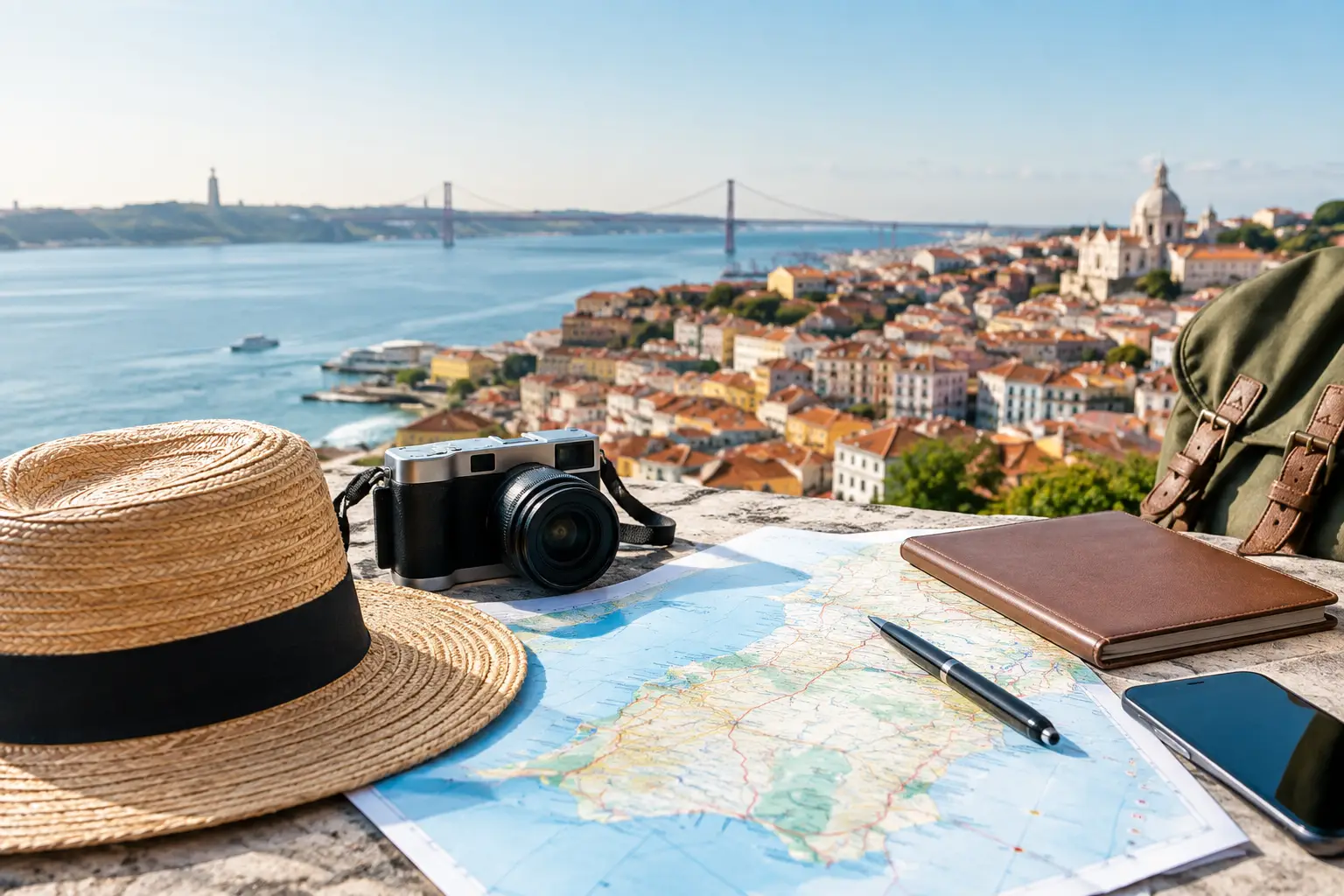
Portugal rewards a well-paced itinerary. Lisbon’s hills, Sintra’s palaces, the Atlantic villages and Porto’s riverside each deserve more than a hurried stop between hotel check-ins. If you are working out how to plan a Portugal trip, start by deciding what you want your days to feel like: lively and urban, cultural and historic, coastal and relaxed, or a considered mix of all three.
For couples, families and private groups, the best plan is rarely the one that includes the most places. It is the one that combines the right destinations, sensible travel times and enough flexibility to enjoy each moment without watching the clock.
Start with the length and rhythm of your stay
Portugal may look compact on a map, but travel days can quickly affect the experience. Lisbon to Sintra is straightforward, while Lisbon to Porto takes a substantial part of the day once transfers, luggage and check-in are considered. Trying to cover Lisbon, the Algarve, Porto and the Douro Valley in a short break can leave little room for the places themselves.
For a first visit, five to seven nights can work very well with two bases. Lisbon is an excellent starting point for discovering Sintra, Cascais, Fátima, Nazaré and Óbidos. Porto is then a natural second base, particularly if you would like to explore the north at a calmer pace.
With eight to ten nights, you can enjoy both cities without rushing and add stops along the way. A longer stay gives you more freedom to include the Algarve, the Douro Valley or lesser-known villages. The deciding factor is not simply the number of days, but how much changing hotels and managing luggage you are willing to do.
Choose destinations that belong together
A practical Portugal itinerary is built around geography. This keeps journey times manageable and allows each day to have a clear purpose.
Lisbon, Sintra and Cascais
Lisbon deserves at least two full days. Its neighbourhoods, viewpoints, historic districts and food scene are best experienced with time to pause rather than as a checklist. Add Sintra as a separate day, because its palaces, gardens and winding roads need unhurried attention. Combining Sintra with Cascais can be a beautiful route when planned privately, especially for travellers who would like to finish the day by the sea.
There is a trade-off: fitting several Sintra monuments into one day may mean less time in Cascais. A local guide can help you choose whether your priority is Pena Palace, the historic centre, Quinta da Regaleira or the coastal scenery, rather than attempting everything.
Fátima, Nazaré and Óbidos
These three destinations work particularly well as a day from Lisbon or as part of a transfer north. Fátima has deep spiritual significance and may call for a slower visit, especially for families or pilgrims. Nazaré offers a striking change of scenery, from the clifftop views at Sítio to the fishing-town atmosphere below. Óbidos brings medieval streets, whitewashed houses and a compact historic centre that is easy to enjoy at a gentle pace.
They are close enough to connect, but they offer very different experiences. If Fátima is central to your trip, allow enough time there rather than treating it as a brief photo stop.
Porto and the north
Porto is more than a shorter version of Lisbon. It has its own rhythm, shaped by the Douro River, traditional neighbourhoods, tiled façades and celebrated wine culture. Plan at least two nights, preferably three if you would like time for a Douro Valley excursion or a quieter day exploring Vila Nova de Gaia and the historic centre.
Porto’s hills and cobbled streets can be demanding for some travellers. Families travelling with young children, older relatives or anyone with limited mobility should factor this into the daily schedule and transport arrangements.
Decide where to stay before finalising day trips
Your accommodation affects every part of the journey: airport arrival, restaurant choices, walking distances and the time needed to begin tours. In Lisbon, a central location can make evenings more enjoyable, but historic streets are often steep and some buildings have limited lift access. In Porto, staying near the river is atmospheric, while other central areas may be more convenient for cars and transfers.
Do not choose a hotel only by its photographs. Consider whether it has easy vehicle access, whether breakfast suits your planned departure times and whether the room layout works for your group. For a family, a larger room or adjoining rooms can make a genuine difference after a full day out.
If your itinerary includes several destinations, it is often worth asking whether one overnight stop can replace a long return journey. This is especially relevant when travelling between Lisbon and Porto with visits to Fátima, Nazaré or Óbidos along the route.
Plan transport around comfort, not just distance
Portugal has trains, buses, taxis and ride-hailing services, all of which can be useful. But public transport is not always the best choice for a multi-stop day, a group with luggage or a visit to rural areas. Timetables may limit your time in smaller destinations, and hiring a car means navigating unfamiliar roads, parking restrictions and narrow historic streets.
A private transfer or tour gives you a different kind of freedom: door-to-door collection, space for luggage and the ability to adapt the day if weather, energy levels or a favourite stop changes the plan. It is particularly helpful for airport arrivals, travel days between cities and routes with several destinations.
This does not mean every journey needs a private vehicle. In Lisbon and Porto, walking and local transport are often the best way to absorb the atmosphere. The most comfortable itinerary usually mixes both approaches: independent time in the cities, with organised transport for more complex days.
Book the experiences that have limited availability
Once your route is set, reserve the elements that shape the whole itinerary. Palace entry times in Sintra, preferred restaurants, train seats, hotels and private tours can be more limited during spring, summer, school holidays and festive periods.
Start with the experiences that matter most to your group. A couple may prioritise a relaxed wine tasting and a scenic dinner. A family may prefer a flexible day with shorter visits and time for a beach stop. Friends travelling together might value a private tour that lets them set the pace and spend longer in the places that interest them.
Avoid filling every hour. Portugal’s appeal is often found in the unscheduled moments: coffee at a small square, a viewpoint discovered on foot or an extra half-hour by the sea. Leaving room in the itinerary is not wasted time. It is how a carefully organised holiday still feels personal.
Consider the season, weather and local calendars
Spring and autumn are excellent for sightseeing, with milder temperatures and generally more comfortable walking conditions. Summer brings long, bright days and a lively atmosphere, but popular sites and coastal towns are busier. Winter can be rewarding for city breaks and cultural travel, although rain and shorter daylight hours should influence outdoor plans.
Portugal’s weather also varies by region. Lisbon and the south tend to be warmer and drier, while Porto and the north can feel cooler and wetter, particularly outside summer. Pack comfortable shoes for cobbles and hills, a light waterproof layer for changeable days, and clothing suitable for churches if Fátima or other religious sites are on your itinerary.
Check local holidays and major events before confirming dates. They can add character to a trip, but may also affect restaurant availability, road access and hotel prices.
How to plan a Portugal trip with local support
A strong itinerary should give you clarity before you arrive and reassurance while you are in Portugal. This is where local support becomes valuable: not only for choosing destinations, but for arranging realistic timings, coordinating pick-ups and adapting details when needed.
PortuCaleTravel creates private tours, personalised experiences and transfers for travellers who want Portugal to feel organised without becoming rigid. With transport, route planning and local knowledge considered together, the journey can be shaped around your group rather than a fixed coach timetable.
Before you confirm your plans, review the route day by day. Ask whether the travel time is realistic, whether each stop has a purpose, and whether the pace suits everyone travelling with you. A Portugal trip becomes far more memorable when there is time to look up, linger and enjoy the country as it unfolds.