
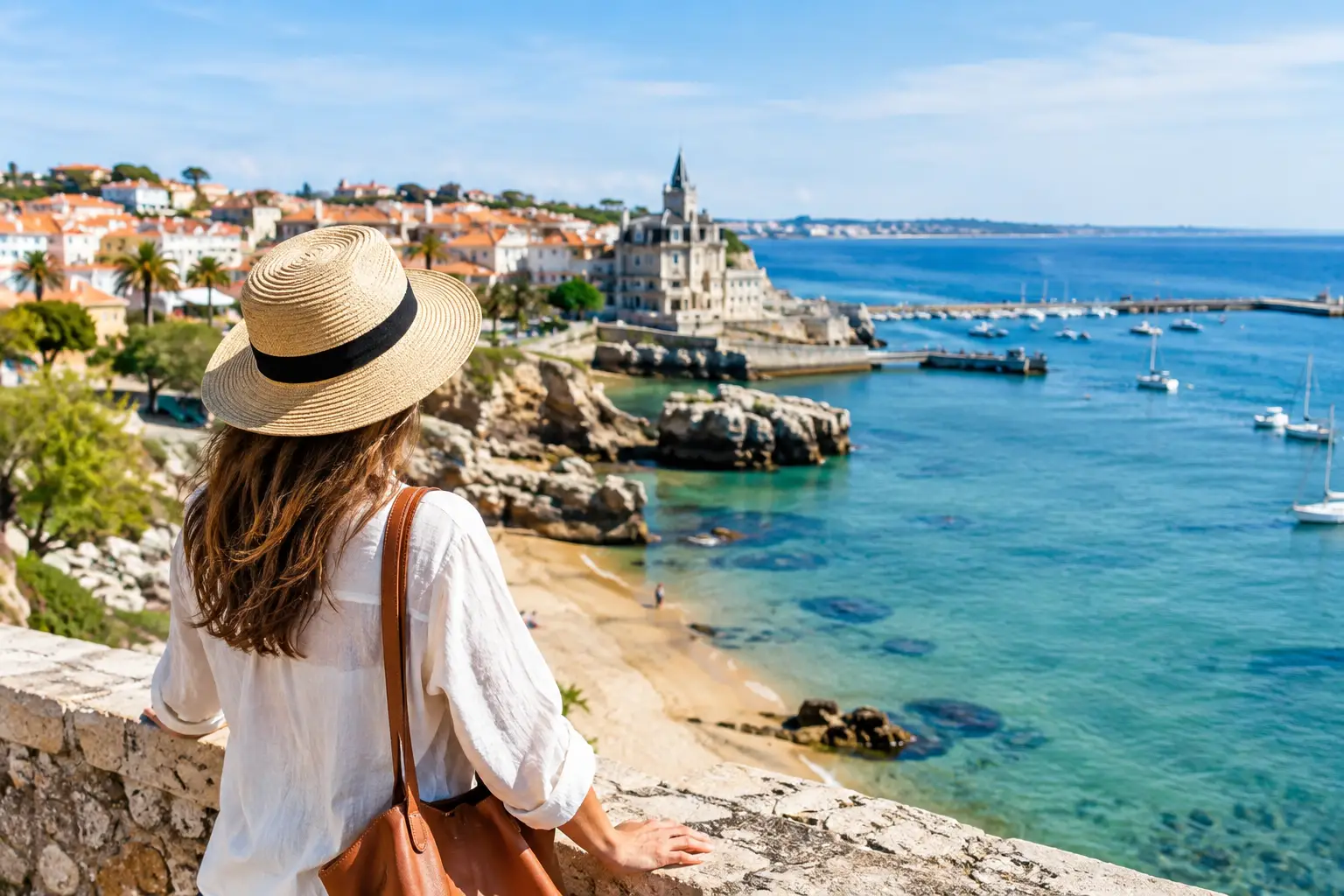
Leaving Lisbon behind for the Atlantic coast changes the rhythm of the day almost immediately. This Cascais day trip itinerary is designed for travellers who want more than a quick photo stop: time for the elegant centre, dramatic cliffs, a proper lunch and the flexibility to follow the weather and your interests.
Cascais is close enough to Lisbon for an easy day out, yet varied enough to reward an unhurried plan. Once a fishing village and later a summer retreat for Portuguese royalty, it combines tiled streets, small beaches, grand villas and open ocean views. For couples, families and private groups, the main advantage of a private experience is simple: the day can move at your pace.
A Cascais day trip itinerary that feels unhurried
A full day of around eight hours is ideal when departing from Lisbon. It gives you room to enjoy the coastal road and the highlights around Cascais without turning every stop into a race against the clock. In summer, an earlier start helps avoid the strongest sun and gives you a calmer arrival in the town centre. In cooler months, leaving a little later can be more comfortable, especially for families.
The exact order can change according to traffic, weather, restaurant reservations and whether you would like more time by the sea. That flexibility matters. The Atlantic coast can be sunny in Cascais and noticeably windier at Guincho just a few kilometres away.
Morning: Lisbon to Estoril and Cascais
A private pick-up from your accommodation in Lisbon is the most relaxed way to begin. The journey to Cascais usually takes around 40 to 50 minutes, depending on where you are staying and the route selected. Following the waterfront through Belém and Estoril can make the transfer part of the experience, with views of the River Tagus giving way to the Atlantic.
Estoril is a worthwhile first glimpse of this coast. Known for its grand casino, gardens and long seaside promenade, it has a more residential, classic resort character than Cascais. A brief stop is often enough, unless you would like to stroll along the promenade or have a particular interest in the area’s history.
From there, continue to Cascais for the heart of the day. The historic centre is compact and easy to explore on foot, with pale stone pavements, traditional Portuguese façades and narrow streets that open unexpectedly onto the marina or beach. Praia da Rainha, a small sandy cove framed by rocks and buildings, is one of the loveliest places to pause near the centre.
Allow time to wander rather than trying to tick off every landmark. Browse the local shops, stop for a coffee, or visit the Igreja da Assunção, close to the waterfront. If museums are part of your ideal holiday, the Museu Condes de Castro Guimarães and the nearby Casa de Santa Maria offer a more cultural perspective on Cascais. Families with younger children may prefer spending that time at the beach or harbour instead.
Lunch: choose the setting, not just the menu
Cascais is an excellent place for a long lunch, particularly if you enjoy fresh fish and seafood. The town centre has plenty of choice, but restaurant style varies considerably. Some travellers prefer a table near the marina, while others would rather choose a quieter local restaurant away from the busiest streets.
Booking ahead is wise for weekends, public holidays and the summer season. A private itinerary makes it easier to plan around your preferred dining time, dietary requirements and the pace of your group. For Brazilian travellers, having support in Portuguese can remove the small uncertainties that often come with choosing a restaurant in an unfamiliar place.
Do not overfill lunch with a rushed three-course plan if you want to see the coast afterwards. A relaxed meal of around one to one and a half hours usually keeps the afternoon enjoyable.
Afternoon: Boca do Inferno and the wild Atlantic coast
After lunch, head west to Boca do Inferno. This striking cliff formation sits just outside central Cascais and is one of the area’s essential stops. Waves push into a rocky chasm, creating an impressive burst of spray when the sea is active. On quiet days, the scale of the limestone cliffs and the deep blue water are reason enough to visit.
Stay behind the marked barriers and take extra care with children. The views are dramatic, but the rocks can be slippery and conditions change quickly. The stop itself does not require much time, usually 20 to 30 minutes, yet it offers a completely different side of Cascais from the sheltered beaches and polished town centre.
Continue towards Praia do Guincho, a broad, wind-swept beach on the edge of the Sintra-Cascais Natural Park. Guincho is particularly popular with surfers, kite surfers and anyone drawn to wide-open scenery. It is not always the best beach for a swim, as currents and wind can be strong, but it is spectacular for a walk, photographs and a sense of the Portuguese coast beyond the city.
This is one of the itinerary’s useful trade-offs. If your priority is beach time in calm water, spend longer in central Cascais. If you are more interested in scenery, dramatic landscapes and the feeling of reaching the edge of the Atlantic, give Guincho the time it deserves.
Add Cabo da Roca if you have a full day
For travellers who want a larger coastal circuit, Cabo da Roca can be added after Guincho. It is the westernmost point of mainland Europe, marked by high cliffs, a lighthouse and far-reaching ocean views. The drive is scenic, but this addition requires more time and is best suited to a full private day rather than a short half-day outing.
Cabo da Roca can be especially rewarding in spring and autumn, when the air is clear and the countryside is green. In peak summer, expect more visitors and stronger winds. Wear a light extra layer even on a warm Lisbon day, as the temperature at the cape can feel surprisingly different.
It is possible to combine Cascais, Guincho and Cabo da Roca comfortably. Adding Sintra on the same day is another matter. While the destinations are geographically close, Sintra’s palaces, hills and traffic deserve their own attention. Trying to do Lisbon, Cascais, Cabo da Roca and several Sintra monuments in one day often means seeing each place only from the car. A better choice is to reserve a separate day for Sintra, or select one carefully chosen stop there.
What to bring for your day in Cascais
The coast is informal, but a little preparation improves the experience. Comfortable shoes are useful for the cobbled streets of Cascais and uneven paths near the cliffs. Sunglasses, sun cream and water are sensible throughout the year, while a light jacket is valuable at Guincho and Cabo da Roca.
If you plan to swim, bring swimwear even if the forecast looks mild. Portuguese Atlantic water is refreshing rather than tropical, and a beach stop may be more appealing than expected on a sunny afternoon. Families may also appreciate a small towel and a change of clothes for children after playing near the sand.
Private transport or train from Lisbon?
The train from Cais do Sodré to Cascais is scenic, affordable and a good choice for independent travellers who plan to focus only on the town centre. It does, however, limit access to Boca do Inferno, Guincho and Cabo da Roca, where taxis can be less convenient at busy times.
Private transport suits travellers who value comfort, door-to-door collection and a route tailored to the group. It is particularly practical for families, small groups, guests with limited mobility, or anyone who would rather enjoy the views than manage connections and parking. With a private tour, the route can be adjusted if one stop captures your attention more than another.
A Cascais day should leave you with salt in the air, photographs you genuinely wanted to take and enough time to enjoy the coast instead of merely passing through it. With thoughtful timing and local support, this stretch of Atlantic Portugal becomes one of the most relaxed and memorable parts of a Lisbon stay.